
Download case study
Research lead: Tom Clemens, University of Edinburgh and Steve Turner, University of Aberdeen
The Challenge
Alongside health effects for the mother, there is mounting evidence that the quality of air inhaled during pregnancy also has implications for the developing baby. Invisible fine particles (PM2.5), which are a fraction of a hair’s breadth, can cross from inhaled air into the blood stream via the lungs. From there they can cross the placenta and enter the baby’s circulation, irritating the inside of blood vessels and restricting growth.
The challenge lies in studying how inhaled PM2.5 affects fetal growth. A “perfect” (but impossible!) study would involve mothers being randomised to spend their entire pregnancy in an environment where they inhaled either high or low concentrations of PM2.5.
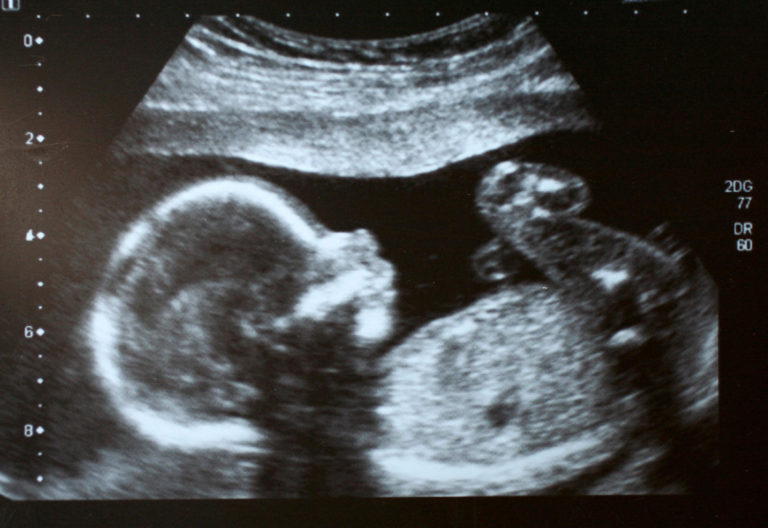
Instead, researchers from the Universities of Aberdeen and Edinburgh used routinely collected air quality measurements and linked these to fetal ultrasound scan measurements, which also allowed them to examine the combined effect of pollution and smoking.
The Research
The Aberdeen Maternity and Neonatal Databank (AMND) holds records of delivered babies at Aberdeen Maternity Hospital including fetal ultrasound scan measurements and other details about the mother such as smoking status. The researchers linked these records to air quality data provided by the United Kingdom Department for the Environment, Food and Rural Affairs (DEFRA).
They examined fetal size in the first, second and third stages of pregnancy in relation to air quality exposure. The team were particularly interested in head size of the unborn and new born baby, since evidence from other sources suggests this may be particularly susceptible to poor air quality.
Their analysis considered the following factors as possible confounders: mother’s age at delivery, parental social class, parity, sex of the baby, maternal height and weight in early pregnancy, maternal smoking and the year of scan.